
2026 Top Glycyrrhiza Glabra Licorice Root Extract Suppliers

Time:2026-10-16 Author:Sienna
0%

Choosing the right supplier for Glycyrrhiza Glabra Licorice Root Extract requires more than comparing prices or catalogue photos. In 2026, buyers need evidence of botanical identity, controlled extraction, batch consistency, and responsible sourcing. A reliable supplier should clearly state the plant part, extraction solvent, extract ratio, glycyrrhizin level, and testing methods. These details matter when the powder arrives in a sealed drum, not merely on a polished website.

Herbal pharmacognosist Dr. James A. Duke described licorice as “one of the most widely used herbs in the world.” That observation explains both its commercial importance and its quality challenges. Demand is broad. Quality is not uniform. Leading manufacturers should provide certificates of analysis, microbiological results, heavy-metal screening, pesticide testing, and traceability documents. Independent laboratory verification adds confidence, especially when suppliers serve food, cosmetic, or standardized botanical applications.

This guide reviews the 2026 Top Glycyrrhiza Glabra Licorice Root Extract Suppliers through practical purchasing criteria. We examine manufacturing experience, raw-material controls, technical support, documentation, and export reliability. We also consider whether suppliers explain limitations honestly. That is important. Some companies publish impressive specifications but offer little information about farming regions or storage conditions. A small gap can become a serious concern later. Buyers should confirm regulatory suitability in their target market and request current samples before signing long-term agreements. No ranking can replace careful verification. Even strong suppliers may vary between batches, seasons, and production sites.
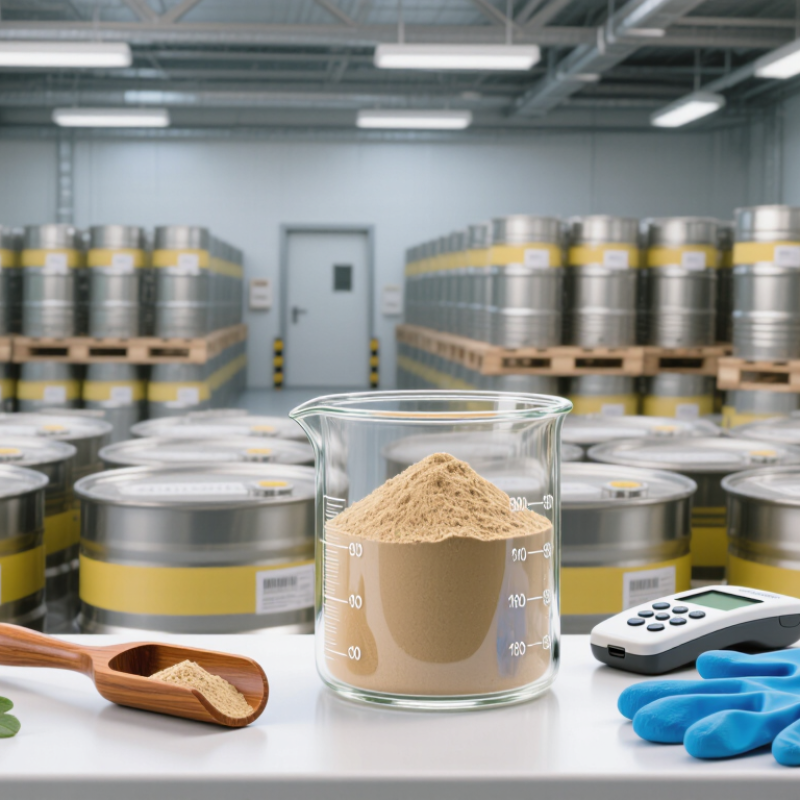
2026 Top Glycyrrhiza Glabra Licorice Root Extract Suppliers

Glycyrrhiza Glabra Licorice Root Extract: Overview and Key Uses

Glycyrrhiza glabra licorice root extract comes from the dried roots of the licorice plant. Its sweet taste mainly comes from glycyrrhizin, while flavonoids contribute color and antioxidant activity. Different extraction methods can change the final profile, smell, solubility, and glycyrrhizin level.

In practical use, the extract appears in herbal formulations, functional foods, beverages, and personal care products. Cosmetic formulators may select it for soothing skin products and tone-care formulas. Food developers often use it as a natural flavoring component. However, “natural” does not mean universally suitable. Excessive glycyrrhizin intake may affect blood pressure and potassium balance, so dosage and product labeling require careful review.

Quality begins with traceable roots and consistent processing. Reliable suppliers should provide botanical identification, country-of-origin details, batch records, and certificates of analysis. HPLC testing can verify glycyrrhizin and selected marker compounds. Testing for pesticides, heavy metals, microbes, and adulterants also matters. The powder may look clean.

That proves little.

I would also compare extraction solvents, moisture levels, packaging, and storage conditions. Heat and humidity can gradually affect stability. A supplier’s technical team should explain specifications clearly, not hide behind broad claims. One limitation remains: published findings do not always match every commercial extract. Buyers should review the actual batch, intended use, and regulatory requirements before making a purchasing decision.

How to Evaluate Licorice Root Extract Suppliers in 2026

How to Evaluate Licorice Root Extract Suppliers in 2026

Evaluating licorice root extract suppliers in 2026 requires more than comparing price per kilogram. I would verify botanical identity, harvest region, extraction solvent, and marker content. The European Pharmacopoeia sets a minimum glycyrrhizic acid level of 4.0% for licorice root. This provides a useful quality benchmark. Request batch-specific HPLC results, not a recycled certificate. Real evidence matters.

The WHO Monographs on Selected Medicinal Plants describe Glycyrrhiza glabra constituents and highlight concerns linked to excessive glycyrrhizin exposure. Suppliers should disclose glycyrrhizin, moisture, heavy metals, pesticide residues, microbiology, and allergen controls. For standardized extracts, check the drug-extract ratio, native extract ratio, carrier materials, and storage temperature. A clear specification sheet is essential. Missing details are warning signs.

I would also audit production controls against HACCP and ISO 22000 principles. Ask for three consecutive batch records and independent laboratory verification. Confirm whether the laboratory uses validated HPLC methods and calibrated instruments. Traceability should reach the farm, collection date, and drying site. Low pricing can be tempting. It should not replace verification. Some suppliers provide attractive samples but inconsistent commercial batches. This is easy to overlook, and buyers should review it honestly. Supplier evaluation is not perfect; even a strong document package cannot replace physical testing.

2026 Top Glycyrrhiza Glabra Licorice Root Extract Suppliers - How to Evaluate Licorice Root Extract Suppliers in 2026
Evaluation Dimension What to Verify Evidence or Acceptance Benchmark Priority Suggested Scoring Guidance
Botanical Identity Correct species, plant part, geographic origin, and harvested material. The specification should clearly identify Glycyrrhiza glabra L. and licorice root or rhizome. Review supplier identity testing, botanical authentication, and lot-specific documentation. Required Full points when identity is confirmed by documented botanical review plus an appropriate analytical method such as HPTLC or HPLC.
Glycyrrhizin Standardization Declared glycyrrhizin or glycyrrhizic-acid content and the permitted batch range. There is no single universal glycyrrhizin percentage for all licorice extracts. Accept only a clearly defined specification supported by a validated quantitative method and a lot-specific certificate of analysis. Required Score higher when the assay method, reference standard, acceptance range, and actual lot result are all disclosed.
Analytical Testing Accuracy, method suitability, and laboratory competence. Review the test method, laboratory qualification, chromatograms where appropriate, and method validation or verification records. Independent laboratory testing is preferred for qualification and periodic confirmation. Required Full points for transparent, reproducible testing with clear units, limits, and laboratory traceability.
Certificate of Analysis Completeness and lot-specific nature of quality records. Each lot should have a certificate covering identity, assay, appearance, moisture or loss on drying, microbiology, contaminants, manufacturing date, retest or expiry information, and lot number. Required Deduct points for generic certificates, missing test dates, absent specifications, or results that cannot be linked to the delivered lot.
Contaminant Control Heavy metals, pesticides, mycotoxins, residual solvents, and other region-specific contaminants. Results should meet the legal and customer requirements of the destination market. The supplier should provide a documented risk assessment and current test results for relevant contaminants. Required Full points when limits are stated, results are quantitative, and testing frequency is risk-based and documented.
Microbiological Quality Total microbial count, yeast and mold, specified pathogens, and test methodology. Acceptance limits must be defined for the intended application and market. Pathogen testing should be included where required by the product risk assessment and applicable regulations. Required Score higher when results are lot-specific and the supplier explains sampling plans and corrective actions for failures.
Manufacturing Controls Hygiene, process control, traceability, sanitation, and change management. Look for a documented GMP and HACCP-based system. ISO 22000 or FSSC 22000 certification can provide additional evidence, but certification should be checked for scope, validity, and site coverage. Required Full points require a current certificate or successful audit, documented batch traceability, and formal change-control procedures.
Extraction Process Extraction solvent, solvent removal, carrier materials, concentration ratio, and drying process. The technical data sheet should state the extraction medium and any carriers or excipients. Residual-solvent controls must be appropriate to the process and destination-market requirements. Required Score higher when process parameters are controlled, reproducible, and supported by residual-solvent and composition testing.
Product Form and Solubility Powder, granule, liquid, water dispersibility, hygroscopicity, and compatibility with the intended formulation. Request a technical data sheet describing particle characteristics, dispersibility or solubility conditions, carrier content, and recommended storage conditions. Recommended Full points when the supplier provides application data and a representative sample that matches the commercial specification.
Stability and Shelf Life Retest period, expiry period, packaging configuration, and storage requirements. Shelf-life claims should be supported by stability data or a justified stability protocol. Packaging should protect the extract from moisture, heat, light, and contamination as appropriate. Required Score higher when real-time or accelerated stability evidence, packaging specifications, and transport conditions are available.
Supply-Chain Traceability Farm or collection area, processor, manufacturing site, and batch genealogy. The supplier should be able to trace raw material and finished-product lots through documented records. Wild-collected material requires additional controls for collection legality and sustainability. Required Full points when a mock recall can be completed promptly and upstream records are available for review.
Regulatory Documentation Market-specific compliance, product status, labeling support, and restricted-substance review. Request specifications, allergen and GMO statements where relevant, country-of-origin information, safety data, and documentation needed for the intended market. Avoid unsupported therapeutic claims. Required Score higher when documentation is current, consistent across documents, and reviewed by a qualified regulatory function.
Organic or Sustainability Claims Validity of organic, fair-trade, ethical-sourcing, or sustainability statements. Claims should be supported by an applicable third-party certificate, certificate number, scope, validity dates, and chain-of-custody information. A marketing statement alone is not sufficient. Value-Added Grant additional points only when the claim is independently verifiable and covers the actual product and manufacturing site.
Supplier Audit and CAPA Audit transparency, deviation management, complaints, recalls, and corrective actions. Review audit reports or an approved supplier questionnaire, complaint records, recall procedures, and evidence that corrective and preventive actions are completed effectively. Recommended Full points require timely responses, root-cause analysis, documented CAPA ownership, and effectiveness checks.
Commercial Reliability Consistency of specifications, order continuity, communication, and change notification. Evaluate representative samples, pilot batches, delivery performance, packaging consistency, and written notification periods for changes to raw materials, processes, sites, or specifications. Recommended Score higher after successful pilot and repeat-lot comparison rather than on quotation price alone.
Evaluation note: Glycyrrhizin content, contaminant limits, microbiological limits, shelf life, and regulatory requirements should be assessed against the intended application and destination market. Supplier ranking should be based on verified documents, representative samples, audit results, and repeat-lot performance rather than promotional claims alone.

Top Supplier Profiles and Product Quality Standards

2026 Top Glycyrrhiza Glabra Licorice Root Extract Suppliers

Top supplier profiles should begin with traceability, not marketing claims. Farm-integrated suppliers can document region, harvest season, drying temperature, and botanical identity. Specialized extractors should show extraction solvents, glycyrrhizin concentration, and batch-to-batch results. Distributors may offer broader inventories, but their chain of custody needs closer review. That detail is often missing.

The WHO Monographs on Selected Medicinal Plants identify glycyrrhizin as the principal triterpene saponin in licorice root. A capable supplier should therefore provide authenticated Glycyrrhiza glabra testing, preferably supported by HPLC or equivalent validated methods. The European Medicines Agency references 100 mg of glycyrrhizin daily as a commonly used adult safety benchmark, not a universal guarantee. Product specifications should address glycyrrhizin, flavonoids, heavy metals, pesticides, microbes, residual solvents, and moisture.

Certificates of analysis matter. They are not enough.

For 2026 sourcing, request three recent batch records, not one perfect sample. Compare assay variation, laboratory accreditation, and reported detection limits. ISO 22000 certification can support food-safety systems, but it does not prove botanical authenticity. I would also question unusually bright color or instant solubility claims. Processing may explain them, yet the explanation should be documented. Even experienced buyers sometimes overlook harvest-year changes, so supplier profiles should include stability data and a written deviation procedure.

2026 Top Glycyrrhiza glabra Licorice Root Extract Suppliers

Product Quality Standards for Supplier Evaluation

These reference targets represent commonly used quality-control criteria for standardized Glycyrrhiza glabra root extracts. Actual specifications may vary according to the extract ratio, intended application, pharmacopoeial requirements, and regional regulations.

Extraction Methods, Specifications, and Regulatory Compliance

Reliable Glycyrrhiza glabra licorice root extract suppliers should explain how each batch is produced. Water extraction is commonly selected for glycyrrhizin-rich extracts. Hydroalcoholic extraction can recover a broader range of flavonoids. The solvent ratio, temperature, extraction time, and concentration method should be documented. Supercritical carbon dioxide may suit specific nonpolar fractions, but it is not a universal solution. Processing changes the chemical profile.

Clear specifications matter. A technical sheet should state the botanical identity, root part, extraction solvent, native extract ratio, and marker assay. It should also report glycyrrhizin content, moisture, ash, particle size, and appearance.

Independent testing should cover microbial limits, pesticides, heavy metals, and residual solvents. Certificates should match the actual lot, not a generic template. That distinction is important.

Regulatory compliance requires more than a quality certificate. Suppliers should maintain traceability from cultivated roots to finished powder. Their facilities should follow suitable GMP controls and retain batch records. Documentation may include allergen statements, country-of-origin details, stability data, and compliant labeling support. Requirements differ by market, so a single global claim can be misleading.

A practical weakness remains: some suppliers provide impressive specifications but limited evidence behind them. Buyers should request current laboratory reports and verify testing methods. Claims about benefits also need careful wording. The evidence is not always as strong as marketing suggests.

Sourcing Factors, Pricing Considerations, and Buyer Guidance

In 2026, sourcing Glycyrrhiza glabra licorice root extract requires more than comparing online quotations.

Buyers should verify the botanical name, plant part, extraction method, and declared glycyrrhizin level.

A reliable supplier can provide batch-specific certificates of analysis, identity testing, microbiological results, and heavy-metal data.

Ask for the original test date. Old documents create uncertainty.

Pricing depends on root origin, harvest conditions, extract concentration, solvent system, and processing controls.

A low price may reflect weaker standardization or limited testing.

Request quotes by kilogram, including minimum order quantity, packaging, freight terms, and payment conditions.

Compare equivalent specifications only. Otherwise, the cheapest offer may be misleading.

Experienced buyers should request a small evaluation sample before approving a larger shipment.

Check color, odor, dispersibility, moisture, and consistency against the specification.

Confirm whether the quoted material is powder, liquid, or carrier-based extract.

Lead times can change during poor harvest seasons, so maintain a practical inventory buffer.

I have found that supplier communication often reveals more than a polished brochure.

Still, communication is not proof. Keep written records, inspect incoming lots, and reassess suppliers when results drift.

Suppliers should also explain traceability from harvested roots to final packaging.

Storage instructions matter, especially for products sensitive to humidity.

FAQS

What documents should buyers request from a licorice root extract supplier?

Request three recent batch records and lot-specific certificates of analysis. Include original test dates, laboratory methods, and detection limits. One perfect sample is insufficient.

How can buyers verify botanical identity?

Confirm the name Glycyrrhiza glabra and the use of roots. Request identity testing supported by HPLC or an equivalent validated method. Check the harvest region, season, and drying temperature.

Which extraction details should appear in the technical sheet?

The supplier should disclose the solvent, ratio, temperature, time, and concentration method. Water extraction often supports glycyrrhizin-rich products. Hydroalcoholic extraction may recover more flavonoids. Processing changes the chemical profile.

Which quality tests are important?

Check glycyrrhizin, flavonoids, moisture, ash, particle size, and appearance. Also review microbes, pesticides, heavy metals, and residual solvents. The certificate should match the actual lot.

Does a food-safety certification prove botanical authenticity?

No. It supports system controls, not plant identity. Authenticity still requires suitable testing and traceability. Certificates are useful. They are not enough.

How should buyers compare supplier prices?

Compare equivalent specifications, not headline prices. Request kilogram pricing, minimum order quantities, packaging, freight, and payment terms. A low price may reflect weaker testing or standardization. Cheap can become expensive.

What should buyers inspect in an evaluation sample?

Check color, odor, moisture, dispersibility, and consistency. Confirm whether it is powder, liquid, or carrier-based extract. Unusually bright color or instant solubility needs documented explanation. I would question it.

How can buyers assess traceability and compliance?

Trace the material from harvested roots to final packaging. Review batch records, suitable GMP controls, origin details, allergen statements, and stability data. Labeling requirements differ by market. One global claim may mislead.

How should buyers manage storage and supply risks?

Maintain an inventory buffer because poor harvests can extend lead times. Follow humidity-sensitive storage instructions. Inspect incoming lots and record changes over time. Supplier communication helps, but it is not proof.

Conclusion

This guide to Glycyrrhiza Glabra Licorice Root Extract provides a practical overview of its common applications in food, cosmetics, and dietary supplement formulations. It explains how buyers can assess suppliers by reviewing botanical identity, cultivation and harvesting practices, traceability, quality systems, testing capabilities, and consistency between batches. The discussion also highlights key product specifications, including glycyrrhizin content, extraction ratio, purity, solubility, moisture, microbiological limits, and contaminant testing.

Readers will learn how different extraction methods can influence potency, color, flavor, and formulation performance, as well as why clear documentation and applicable regulatory compliance are essential. The guide further considers sourcing regions, minimum order quantities, lead times, packaging, shelf life, and pricing factors. By comparing technical data, certificates, sample results, and communication quality, buyers can select a reliable supplier that offers safe, consistent, and application-appropriate Glycyrrhiza Glabra Licorice Root Extract.

Sienna

Sienna

Sienna is a skilled marketing professional with a deep expertise in our company’s core products and services. With a passion for innovation and detail, she plays a pivotal role in crafting insightful blog posts that not only highlight the unique features of our offerings but also provide valuable......