
How to Choose Lingzhi Mushroom Extract Suppliers?

Time:2026-10-16 Author:Ethan
0%

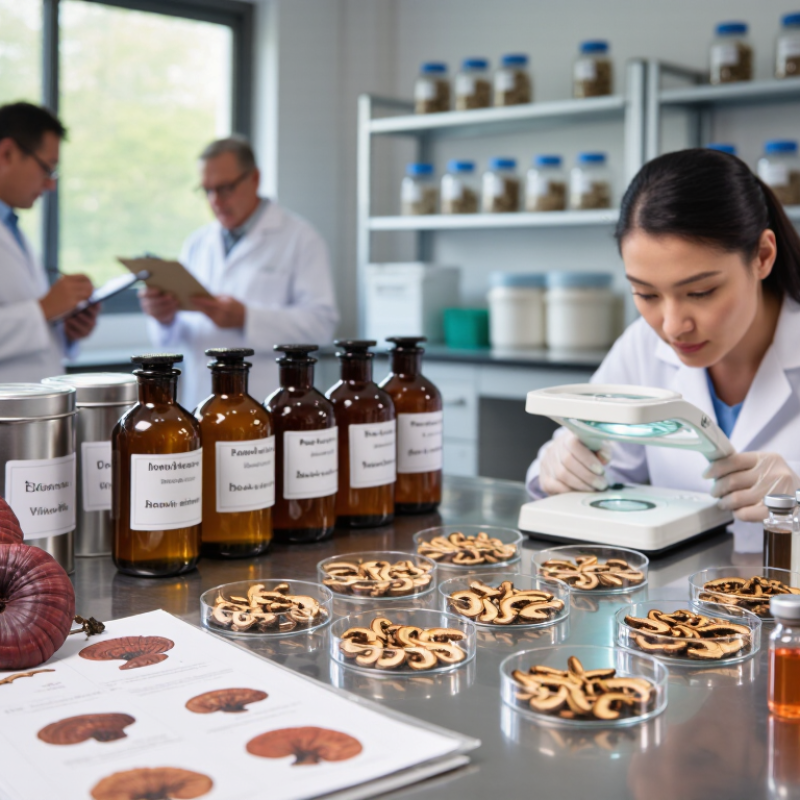
Choosing a reliable Lingzhi Mushroom Extract supplier requires more than comparing prices or reading attractive product descriptions. Buyers must examine species identification, cultivation conditions, extraction methods, testing records, and batch consistency. A polished website is not enough.

Professor Solomon P. Wasser, a respected medicinal-mushroom researcher, has described medicinal mushrooms as “a source of valuable bioactive compounds.” This perspective matters because Lingzhi, commonly associated with Ganoderma species, contains different compounds depending on the strain, growing medium, and processing method. A serious supplier should identify the species clearly and explain whether the extract uses fruiting bodies, mycelium, or both.

Look closely at the certificate of analysis. It should show testing for heavy metals, pesticides, microbes, and residual solvents. It should also identify key markers, such as polysaccharides or triterpenes, when relevant to the product specification. Ask for recent batch records, not an old sample from a different production run. Traceability should reach the cultivation site and processing facility.

Supplier qualifications matter. Look for documented GMP systems, independent laboratory testing, stable packaging, and responsive technical support. Small details reveal experience: sealed inner bags, moisture protection, clear lot numbers, and storage instructions. No supplier is perfect. I would still question unclear claims, inconsistent test methods, and unusually low prices.

This guide will help buyers compare evidence rather than promises. It will also highlight practical questions that expose weak quality controls. The goal is not to choose the loudest supplier. It is to choose a transparent, consistent, and verifiable partner.
How to Choose Lingzhi Mushroom Extract Suppliers?

Define Lingzhi Extracts by Species, Parts Used, and Active-Compound Data

How to Choose Lingzhi Mushroom Extract Suppliers?

Define lingzhi extracts before comparing quotations. Ganoderma lingzhi and Ganoderma lucidum are related, but not automatically interchangeable. Ask suppliers for species confirmation using DNA barcoding or validated microscopic methods. The 2023 Grand View Research report valued the global medicinal mushroom market at approximately USD 24 billion. That growth increases the need for stronger identity controls, not attractive packaging.

Parts used also change the extract profile. Fruiting bodies may provide different triterpene patterns than cultured mycelium. Spores contain a lipid-rich fraction and need clear wall-breaking information. Request the extraction solvent, ratio, temperature, and batch yield. Then review a recent certificate of analysis showing beta-glucans, triterpenes, moisture, heavy metals, microbes, and residual solvents.

“Polysaccharides” alone is too vague. It may include starch.

The European Pharmacopoeia emphasizes botanical identity, impurity control, and consistent assay methods for herbal substances. Suppliers should explain whether beta-glucans were measured by an enzymatic method or calculated indirectly. Triterpene results should name tested compounds, not only report “total triterpenoids.”

Independent laboratory testing matters. Still, one laboratory report is not a complete quality history. Compare three batches, inspect sample retention practices, and question unusually high numbers. I would also record the source region, harvest date, and storage conditions. These details are easy to overlook. That is where confidence often weakens.

Set Potency Targets Using β-Glucan %, Triterpene %, and Extract Ratios

How to Choose Lingzhi Mushroom Extract Suppliers?

Set potency targets before comparing supplier prices. Commercial Ganoderma lucidum extracts often show 20–50% β-glucans and 2–6% triterpenes, according to ranges discussed in recent Journal of Fungi reviews and technical industry surveys. These figures are not universal standards. They depend on the mushroom part, extraction solvent, moisture level, and testing method.

I would request separate β-glucan and triterpene results on a dry-weight basis. Ask whether β-glucans were measured with an AOAC-aligned enzymatic method, rather than estimated from total polysaccharides. Triterpenes need equally specific testing, preferably HPLC with named marker compounds. A vague high potency claim is weak evidence. It is marketing language.

Extract ratios require caution. An 8:1 ratio means eight units of raw material produced one unit of extract; it does not prove stronger activity. The 2023 United States Pharmacopeia Dietary Supplements Compendium emphasizes identity, purity, and reliable analytical controls, not ratio alone. Check three recent batch certificates, heavy-metal results, microbial limits, and the tested mushroom material. Fruiting body and mycelium are not interchangeable. I have seen attractive ratios with modest β-glucan results. That mismatch deserves questions. Suppliers should explain variability, not hide it. Some specifications may look precise but still lack validated laboratories or reference standards.

Verify COAs with HPLC, ICP-MS, Microbial Tests, and Batch Traceability

Choosing a lingzhi mushroom extract supplier starts with evidence, not attractive packaging. In practice, request the current Certificate of Analysis (COA) for the exact lot being offered. A generic specification sheet is not enough. The COA should identify the extract ratio, marker compounds, moisture, and testing date. It should also show a laboratory name, method references, and authorized approval. Ask whether the laboratory is independent and suitably accredited. Some documents look professional but leave basic questions unanswered.

HPLC can verify key triterpenes or polysaccharide-related markers, depending on the validated method. However, the result matters only when the method, reference standard, and detection limits are clear. ICP-MS testing checks elements such as lead, cadmium, mercury, and arsenic at very low levels. Do not accept “passed” without numerical results and units. Microbial testing should cover total counts, yeast and mold, and relevant pathogens. Sampling matters. A clean report from one container cannot represent every production lot.

Batch traceability connects the test report to physical material. Request the lot number, harvest or processing record, production date, packaging details, and retain-sample policy. I also compare the COA with independent testing when the ingredient enters a sensitive formulation. This costs more time. It can prevent expensive surprises. Suppliers should explain deviations, retesting, and out-of-specification results honestly. I once treated complete paperwork as reliable evidence; that was too optimistic. Documents support judgment, but they do not replace controlled sample review.

Audit GMP, HACCP, ISO 22000, and USP <232>/<233> Compliance

How to Choose Lingzhi Mushroom Extract Suppliers?

Audit GMP, HACCP, ISO 22000, and USP <232>/<233> Compliance

When evaluating lingzhi mushroom extract suppliers, begin with their GMP system. Ask for batch records, cleaning logs, deviation reports, and employee training evidence. Review how they identify the mushroom species and control raw material substitutions. A credible supplier can explain each step from cultivation to extraction. Good documentation matters.

HACCP should cover biological, chemical, and physical hazards. Request the hazard analysis and critical control point records. ISO 22000 certification can support this review, but do not accept a certificate alone. Verify its scope, validity, and audit history. A site visit may reveal details that paperwork hides. Look for labeled containers, controlled storage, and clear allergen procedures. Small gaps deserve attention.

For USP <232> and <233>, ask how the supplier controls elemental impurities. Confirm whether testing covers arsenic, cadmium, lead, and mercury, where applicable. Review laboratory methods, sample preparation, detection limits, and recent test reports. Results should be linked to specific lots, not generic product sheets. One practical warning: impressive certificates cannot replace current analytical data. A supplier may pass an audit yet miss a weak point in sampling. That possibility deserves honest discussion. Check corrective actions, retesting rules, and release approval before accepting the extract.

How to Choose Lingzhi Mushroom Extract Suppliers?

Audit GMP, HACCP, ISO 22000, and USP <232>/<233> Compliance

This illustrative weighting prioritizes evidence that should be reviewed during a supplier audit. GMP focuses on manufacturing controls, HACCP on hazard prevention, ISO 22000 on the food safety management system, USP <232> on elemental impurity limits, and USP <233> on analytical procedures and validation. The scores are audit-planning weights, not supplier performance results.

Compare Cost per Active Gram, MOQ, Lead Time, and Stability at 25°C/60% RH

Choosing a Lingzhi mushroom extract supplier requires more than comparing the price per kilogram. Calculate the cost per active gram using the verified assay result, not the listed extract ratio. For example, a lower-priced powder may contain fewer triterpenes or polysaccharides. Request batch-specific test reports, analytical methods, and sample results from an independent laboratory. These details show whether the quoted value is technically meaningful.

MOQ can affect cash flow, storage, and product freshness. Ask whether the supplier can support a pilot order before accepting a large commitment. Confirm lead time in writing, including sampling, testing, production, and shipping. A supplier with clear timelines is easier to manage. Still, delays happen. Build a small buffer into your launch schedule.

Tips: Compare three quotations in one spreadsheet. Record active grams, MOQ, lead time, and testing fees. Request stability data at 25°C/60% RH, with testing intervals and packaging details. Check changes in moisture, color, assay, and microbial results over time. Packaging matters. A strong foil barrier may protect the extract better than a simple plastic bag. Stability data can also reveal an uncomfortable issue: the material may remain safe while its active level gradually declines. This is where supplier experience becomes valuable, although no document should replace your own verification.

How to Choose Lingzhi Mushroom Extract Suppliers? - Compare Cost per Active Gram, MOQ, Lead Time, and Stability at 25°C/60% RH

Anonymized commercial comparison using beta-glucan content as the active-marker basis

Anonymous Supplier Profile Extract Type Beta-Glucans
Assay
Active Grams
per kg
Indicative Price
per kg (USD)
Cost per
Active Gram
MOQ Typical Lead
Time
Packaging Stability at
25°C/60% RH
Documentation
Profile A Hot-water extract
Fruit body
30% 300 g $72 $0.24/g 25 kg 18–25 days 25 kg foil-lined fiber drum 96% retention
6 months
COA, allergen, heavy metals, microbiology
Profile B Dual extract
Fruit body
40% 400 g $95 $0.24/g 50 kg 25–35 days 20 kg vacuum-sealed bags 98% retention
6 months
COA, pesticide, solvent, GMO, microbiology
Profile C Hot-water extract
Mycelium and fruit body
20% 200 g $58 $0.29/g 10 kg 12–18 days 10 kg foil-lined bags 93% retention
6 months
COA, microbiology, heavy metals, allergen
Profile D Hot-water extract
Fruit body
50% 500 g $130 $0.26/g 100 kg 30–45 days 25 kg nitrogen-flushed drums 97% retention
6 months
COA, full contaminant panel, stability protocol
Profile E Dual extract
Fruit body
30% 300 g $82 $0.27/g 25 kg 20–30 days 20 kg foil-lined fiber drum 95% retention
6 months
COA, pesticide, heavy metals, microbiology
Profile F Standardized extract
Fruit body
60% 600 g $165 $0.28/g 200 kg 35–50 days 25 kg nitrogen-flushed drums 98% retention
6 months
COA, full contaminant panel, stability report

Calculation: Cost per active gram = indicative price per kilogram ÷ active grams per kilogram. For example, $72 ÷ 300 g = $0.24 per active gram.

Stability basis: Percentage of initial beta-glucan assay remaining after six months in sealed commercial packaging at 25°C and 60% relative humidity. Confirm the result with supplier-specific real-time stability data before qualification.

Commercial note: Prices, MOQs, and lead times are indicative bulk-market benchmarks and may vary by origin, order volume, specification, packaging, testing requirements, and Incoterms. All active-marker values should be verified against a lot-specific COA.

FAQS

How can I confirm the mushroom species?

Ask for DNA barcoding or validated microscopic identification. Related species are not automatically interchangeable. Review the evidence carefully.

Which mushroom part should the extract use?

Fruiting bodies, mycelium, and spores can produce different chemical profiles. Spores need clear wall-breaking information. The part used must appear on batch documents.

What extraction details should suppliers disclose?

Request the solvent, extraction ratio, temperature, and batch yield. These details help explain the final extract. Missing data should reduce confidence.

Which results should appear on a certificate of analysis?

Check beta-glucans, named triterpenes, moisture, heavy metals, microbes, and residual solvents. “Polysaccharides” alone is too vague. It might include starch.

How should beta-glucan and triterpene results be reported?

Ask whether beta-glucans used an enzymatic method or indirect calculation. Triterpene results should name tested compounds. “Total triterpenoids” needs more explanation.

How many production batches should I compare?

Compare at least three recent batches. Check lot numbers, harvest dates, source regions, and storage conditions. One report is not enough.

What records should a supplier provide during a quality audit?

Request batch records, cleaning logs, deviation reports, training evidence, and corrective actions. Follow the process from cultivation to release. Paperwork can hide small gaps.

How should elemental impurities be checked?

Confirm testing for arsenic, cadmium, lead, and mercury where applicable. Review sample preparation, detection limits, and laboratory methods. Results should match specific lots.

Can certification alone prove consistent quality?

No. Verify certificate scope, validity, and audit history. Inspect storage areas, labels, and allergen controls when possible. Certificates help, but they are not magic.

Conclusion

Choosing reliable Lingzhi Mushroom Extract suppliers requires more than comparing prices. Start by defining the extract clearly, including the Lingzhi species, mushroom parts used, extraction method, and available active-compound data. Set measurable potency targets for beta-glucans and triterpenes, and confirm whether the stated extract ratio reflects meaningful concentration or only raw-material input. This helps ensure that different suppliers are evaluated on a consistent basis.

Before purchasing, verify each Certificate of Analysis through independent or validated testing, including HPLC for triterpenes, ICP-MS for heavy metals, microbial analysis, and complete batch traceability. Review the supplier’s GMP, HACCP, ISO 22000, and relevant USP <232>/<233> compliance records. Finally, compare the true cost per gram of active compounds rather than the price per kilogram, while also assessing MOQ, lead time, packaging, and stability data under 25°C/60% RH. A structured evaluation can reduce quality risks and support consistent product performance.

Ethan

Ethan

Ethan is a seasoned marketing professional with a deep expertise in our company's innovative product line. With a passion for sharing knowledge and insights, he takes the lead in regularly updating our corporate blog, where he explores industry trends, product features, and effective marketing......