Top Rosmarinus Officinalis Rosemary Leaf Extract Suppliers

Time:2026-10-24 Author:Madeline
0%

Finding reliable Rosmarinus Officinalis Rosemary Leaf Extract suppliers requires more than comparing prices or attractive product photographs. Buyers should examine botanical identity, extraction method, concentration, and intended application. A dependable supplier can provide a current Certificate of Analysis, batch number, country of origin, and clear storage guidance. Details matter.

Quality evidence should include testing for microbial limits, heavy metals, pesticides, and residual solvents where relevant. HPLC or GC-MS data may help confirm the extract’s characteristic compounds, although testing requirements vary by product format. Suppliers should also explain whether the material is oil-soluble, water-dispersible, or carried in another medium. This affects formulation performance, stability, and packaging decisions.

Top suppliers usually maintain documented traceability from cultivated leaves to finished drums. Their facilities should follow suitable quality systems and provide consistent technical support. Responsive communication matters when a buyer needs samples, revised specifications, or allergen information. It is also useful to review minimum order quantities, lead times, shelf life, and transport conditions before signing a purchase agreement.

No supplier is perfect. Marketing language can sound stronger than the available evidence. A careful review should separate verified specifications from general claims. Sustainability deserves attention, too, including harvesting practices, packaging choices, and supplier transparency. The best partner is not always the largest company. It is the one that matches your formulation needs, compliance expectations, and production scale. This guide introduces practical criteria for comparing leading Rosmarinus Officinalis Rosemary Leaf Extract suppliers with greater confidence and professional judgment.
Top Rosmarinus Officinalis Rosemary Leaf Extract Suppliers

Rosemary Leaf Extract: Botanical Identity and Key Properties

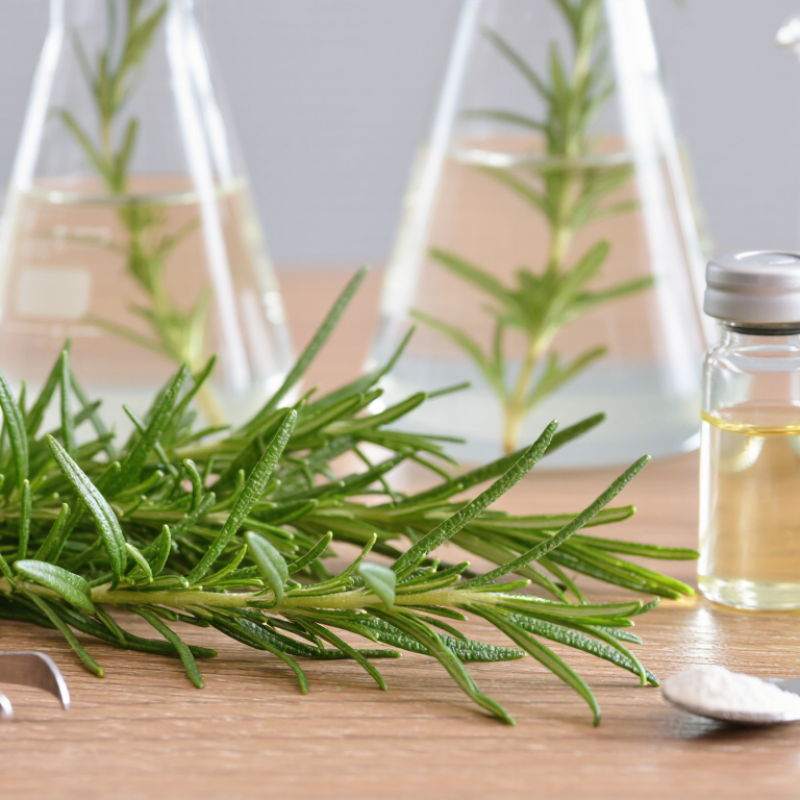
Rosmarinus officinalis is the former botanical name for Salvia rosmarinus, an evergreen member of the Lamiaceae family. Many specifications still use Rosmarinus officinalis, so both names deserve attention. The plant has narrow, leathery leaves with a darker upper surface and a pale, slightly hairy underside. Its sharp herbal scent comes from volatile compounds stored in small leaf glands. Rosemary leaf extract is not chemically uniform. Growing region, harvest season, drying temperature, and extraction method can change its profile. Important constituents may include rosmarinic acid, carnosic acid, carnosol, 1,8-cineole, camphor, and alpha-pinene. Their levels require laboratory confirmation.

Quality assessment should connect botanical identity with measurable evidence. Reliable suppliers can provide the plant part, extraction ratio, solvent details, batch number, and country of origin. HPLC testing may help verify phenolic compounds, while GC-MS can examine volatile components. Microscopic checks and botanical authentication add useful safeguards. Color and aroma offer clues, but they are not enough. A dark green powder is not automatically a stronger extract. Storage also matters; heat, light, oxygen, and moisture may gradually affect sensitive constituents. Experienced buyers should review certificates of analysis and test methods carefully. Documents can look complete yet remain vague. That weakness deserves questions, not assumptions. Supplier selection becomes more credible when identity, composition, traceability, and stability data agree.

What Defines a Reliable Rosemary Extract Supplier

A reliable Rosmarinus officinalis rosemary leaf extract supplier begins with identity, not attractive packaging. The supplier should document botanical name, plant part, harvest region, extraction solvent, and concentration method. A current certificate of analysis should match every production lot. It should include marker compounds, moisture, microbiological limits, heavy metals, pesticides, and residual solvents.

In practical sourcing, traceability often separates a dependable supplier from a risky one. Each drum should connect to a batch record, test method, and retain sample. HPLC or GC-MS results provide stronger evidence than a vague “standardized extract” claim. The FAO and WHO Codex General Principles of Food Hygiene, updated in 2022, emphasize hazard control and documented verification. These principles apply well to botanical ingredient purchasing.

Quality systems matter too. The ISO Survey 2023 recorded over 1.26 million ISO 9001 certificates worldwide, showing how widely documented quality management is used. Certification alone proves little. Audit scope and current records matter more. A serious supplier welcomes an independent audit, explains deviations, and reports stability data under defined storage conditions. Ask for evidence.

A reliable partner also communicates limits. Rosemary composition can vary with cultivar, harvest timing, drying temperature, and extraction conditions. Grand View Research projects continued growth in the global rosemary extract market through 2030, increasing pressure on supply consistency. Yet market growth does not guarantee technical discipline. One weakness remains common: suppliers may share impressive specifications but limited real-world stability data. That gap deserves careful questioning.

Supplier Qualification: Quality, Certifications, and Testing

Top Rosmarinus Officinalis Rosemary Leaf Extract Suppliers

Qualifying a rosemary leaf extract supplier requires more than checking a polished certificate folder. Request the botanical name, plant part, country of origin, extraction method, and carrier details. The specification should identify marker compounds, appearance, odor, moisture, and storage conditions. A traceable lot number must connect the product to harvesting and manufacturing records. This detail matters when an extract arrives with a darker color or a weaker aroma than expected.

Review certifications carefully. ISO, GMP, HACCP, and organic certificates can support supplier credibility, but their scope and expiry dates need verification. Ask for a current certificate of analysis from the actual production lot. Independent laboratory results should cover identity, assay, microbial limits, heavy metals, pesticides, and residual solvents. HPLC or GC-MS testing may help confirm characteristic rosemary compounds, such as carnosic acid and rosmarinic acid. Still, one test cannot prove every quality claim.

Tips: Request a small sample in a sealed, light-protective container. Compare it with the specification, not only the sales sample. Check whether the supplier keeps retain samples and investigates deviations. A remote audit may reveal less than an on-site visit. Supplier responses can also expose weaknesses: vague answers, missing raw data, or repeated delays deserve closer review. No qualification process is perfect. Reassess performance after each shipment.

Top Rosmarinus Officinalis Rosemary Leaf Extract Suppliers - Supplier Qualification: Quality, Certifications, and Testing

Qualification Area Recommended Supplier Requirement Objective Evidence to Request Testing or Verification Approach Assessment Status Review Timing
Botanical Identity Correct species and plant part: Rosmarinus officinalis leaf extract. Synonym and current accepted botanical nomenclature should be documented. Botanical specification, supplier declaration, authenticated reference sample, and raw-material identification records. Macroscopic or microscopic examination where applicable, supported by chromatographic fingerprinting such as HPTLC or HPLC. Required Each lot
Plant-Part Control Leaves should be clearly separated from stems, roots, and unrelated plant material. Extraneous matter must meet the agreed specification. Harvesting and sorting procedure, incoming inspection records, and plant-part specification. Visual inspection, sieve or foreign-matter assessment, and supplier batch-record review. Required Each lot
Geographic and Traceability Data Full traceability from cultivation or collection through extraction, packaging, and shipment. Country or region of origin, harvest date, lot number, chain-of-custody records, and recall procedure. Document review and mock-recall testing. Traceability should connect the finished extract to the original raw-material lot. Required Annual and per lot
Quality Management System Documented quality-management system with controlled procedures for deviations, complaints, CAPA, change control, and document retention. Quality manual, organization chart, SOP index, recent audit summary, CAPA examples, and change-control procedure. Desktop quality audit followed by risk-based on-site or remote audit. Required Annual review
Certification Status Certification appropriate to the intended use, such as ISO 9001, HACCP, ISO 22000, FSSC 22000, or applicable GMP certification. Valid certificate, certification scope, issuing body, expiry date, and latest surveillance or recertification result. Verify certificate authenticity and confirm that the certified scope covers botanical extraction and the relevant production site. Use-dependent Before approval and annually
Extraction Process Controlled extraction method with defined solvent, solvent-to-herb ratio, temperature, concentration, drying, and storage parameters. Process flow diagram, master manufacturing record, critical-process-parameter limits, and equipment-cleaning records. Process audit and comparison of batch records against the approved manufacturing specification. Required Initial approval and after changes
Marker Compounds Specification for relevant rosemary markers, commonly including carnosic acid and carnosol, with limits appropriate to the extract type. Finished-product specification, validated analytical method, reference standards, and representative certificates of analysis. HPLC or another scientifically justified validated method. Acceptance limits must be agreed before purchase. Required Each lot
Solvent Residues Residual solvents must comply with the applicable pharmacopoeial or regulatory limits for the intended market and route of use. Extraction-solvent declaration, residual-solvent specification, method validation summary, and batch results. Headspace gas chromatography where appropriate, with limits aligned to ICH Q3C or the applicable local standard. Required Each lot or justified periodic plan
Heavy Metals and Elemental Impurities Lead, cadmium, mercury, arsenic, and other relevant elements must comply with the destination-market requirements. Risk assessment based on soil, water, equipment, and processing inputs, plus recent analytical reports. ICP-MS or ICP-OES performed by a qualified laboratory; limits should be based on the final product and intended exposure. Risk-based Each lot or periodic plan
Pesticide Residues Residues must meet applicable maximum residue limits and customer requirements for botanical ingredients. Supplier agricultural controls, grower declarations, pesticide-use records, and multi-residue test reports. Validated multi-residue GC-MS/MS and LC-MS/MS methods, with analyte coverage justified by origin and risk. Risk-based Periodic and origin-dependent
Microbiological Quality Total aerobic microbial count, total yeast and mold count, and absence or limits for specified pathogens must meet the applicable product specification. Microbiological specification, laboratory qualification records, and lot-specific results. Validated methods such as those described in relevant pharmacopoeial or food-microbiology standards, including tests for pathogens where required. Required Each lot
Mycotoxins Aflatoxins and other relevant mycotoxins must comply with destination-market limits when raw-material or storage risk is present. Storage controls, moisture-control records, risk assessment, and current mycotoxin test results. HPLC or LC-MS/MS method suitable for the relevant toxin panel and required detection limits. Risk-based Periodic and origin-dependent
Physical and Chemical Specifications Defined appearance, color, odor, moisture or loss on drying, bulk density, solubility, pH where relevant, and extract ratio. Approved finished-product specification and representative certificate of analysis. Routine laboratory testing using approved methods and comparison with retained reference samples. Required Each lot
Adulteration Screening Controls should address undeclared fillers, synthetic marker addition, substitution with other herbs, and unauthorized colorants or preservatives. Adulteration-risk assessment, authenticity policy, supplier declarations, and laboratory screening plan. Orthogonal testing combining chromatographic fingerprinting, targeted marker analysis, and additional techniques when risk warrants. Risk-based Initial approval and periodic
Allergen and GMO Status Clear declaration of intentionally added allergens and GMO status, based on the formulation and supply chain. Allergen statement, processing-aid declaration, GMO statement, and cross-contact controls. Document review; analytical testing may be required when the supply-chain risk cannot be adequately controlled by documentation. Use-dependent Annual and after changes
Packaging and Storage Packaging must protect the extract from moisture, light, oxygen, and contamination. Storage conditions and shelf life must be supported by data. Packaging specification, compatibility assessment, storage instructions, stability protocol, and expiry or retest justification. Review packaging materials, warehouse conditions, transport controls, and available real-time or accelerated stability data. Required Each shipment and annual review
Laboratory Competence Testing laboratories should demonstrate suitable competence, impartiality, validated methods, and controlled reference standards. Laboratory accreditation or qualification records, method validation, proficiency testing, and equipment calibration records. Review laboratory scope, validation parameters, detection limits, uncertainty where relevant, and data-integrity controls. Required Initial approval and periodic
Certificate of Analysis Each lot certificate should identify the material, lot number, manufacturing date, test methods, results, specifications, and authorized approval. Original or electronically controlled certificate of analysis linked to the shipped lot. Compare certificate data with independent incoming-test results and verify consistency across multiple lots. Required Each lot
Supplier Performance Consistent conformance, reliable delivery, timely deviation responses, and effective complaint resolution. Key performance indicators, nonconformance history, complaint log, delivery records, and CAPA effectiveness reviews. Scorecard evaluation using quality, service, documentation, and delivery metrics. Required Quarterly or annually
Qualification note: Acceptance limits should be finalized according to the extract type, intended application, serving or exposure level, destination-market regulations, and the buyer’s approved specification. Certification does not replace lot-specific testing and supplier performance monitoring.

Product Forms, Applications, and Customization Options

Top Rosmarinus Officinalis Rosemary Leaf Extract Suppliers

Rosmarinus officinalis rosemary leaf extract is available in several practical forms. Oil-soluble liquid fits sauces, meat products, and lipid-based cosmetics. Water-dispersible grades suit beverages and emulsions. Spray-dried powder offers easier transport and blending. Some suppliers standardize carnosic acid and carnosol levels. Others sell full-spectrum extracts with a stronger herbal aroma. Product form changes stability, color, dosage, and processing behavior. It is not a minor detail.

Food preservation remains a major application. Grand View Research’s 2024 rosemary extract market assessment identifies food and beverage as a leading demand area. The report also links growth with clean-label antioxidant preferences. Cosmetic manufacturers often use the extract in creams, scalp products, and cleansing formulas. Supplement developers may request capsules, powders, or liquid concentrates, subject to local requirements. Customization can include antioxidant strength, carrier oil, odor reduction, particle size, and private packaging. Ask for HPLC results, microbiological limits, heavy-metal testing, residual-solvent data, and batch traceability. A certificate alone may not explain performance.

A useful supplier should provide accelerated-stability data under realistic heat and light conditions. Storage matters.

Some specifications look impressive but remain incomplete. For example, total extract ratio does not confirm active antioxidant content. Buyers should compare carnosic acid results, peroxide values, and application trials. The 2023 Innova Market Insights clean-label trend report shows continuing consumer interest in recognizable ingredients, but market preference does not replace technical validation. Small pilot batches can expose sediment, bitterness, or unexpected color changes before full production.

Sourcing, Pricing, and Responsible Supply Chain Practices

Top Rosmarinus Officinalis Rosemary Leaf Extract Suppliers

Reliable sourcing starts with verified botanical identity, not attractive pricing. Suppliers should provide Latin-name confirmation, harvest location, extraction method, and batch-level certificates. Grand View Research valued the global botanical extracts market at approximately USD 31 billion in 2023. This wider market shows strong demand, but rosemary pricing remains highly specification-driven. Carnosic acid content, solvent choice, organic status, minimum order volume, and packaging can change the quote significantly. Cheap is not always efficient.

Ask for recent certificates of analysis, pesticide screening, heavy-metal results, microbiological limits, and stability data. ISO 16128 can support cosmetic ingredient discussions, but it does not replace independent testing. The FAO’s State of Food and Agriculture 2023 report estimated that 13.2% of food was lost between harvest and retail globally. Rosemary leaves face similar risks through poor drying, storage humidity, and long transport routes. Suppliers should record harvest dates, drying temperatures, warehouse conditions, and shipment temperatures.

Traceability needs practical proof. A coded batch record should connect the farm, processor, laboratory, and final shipment. Responsible suppliers can also disclose worker protections, water management, and waste handling. I would request corrective-action records, not only polished policy documents. Some supplier audits still examine paperwork more closely than field conditions. That weakness deserves attention. Pricing should be compared using landed cost, test requirements, yield, shelf life, and rejected-batch risk, rather than the unit price alone.

FAQS

What information should a supplier provide for rosemary leaf extract?

Request the botanical name, plant part, origin, extraction method, carrier, marker compounds, and storage conditions. The specification should also describe color, odor, moisture, and lot identification.

Which certificates should buyers review?

Review current quality, manufacturing, food-safety, and organic certificates when relevant. Check their scope and expiry dates. A certificate alone is not enough.

What testing should accompany each production lot?

Request a lot-specific certificate of analysis. Testing should cover identity, active compounds, microbes, heavy metals, pesticides, and residual solvents. Independent laboratory data adds useful confidence.

How can buyers confirm the extract’s active compounds?

Chromatography testing can measure characteristic compounds, including carnosic acid and rosmarinic acid. Compare reported levels with the agreed specification. One test cannot prove every quality claim.

Which product form suits different applications?

Oil-soluble liquid works well in sauces, meat products, and oil-based cosmetics. Water-dispersible grades suit beverages and emulsions. Spray-dried powder supports easier transport and blending.

What should be checked before full-scale production?

Test a sealed sample in a light-protective container. Run small pilot batches before placing a large order. Check sediment, bitterness, color changes, blending, and dosage behavior.

How should rosemary extract pricing be compared?

Compare landed cost, active-compound levels, testing requirements, yield, shelf life, and rejected-batch risk. Minimum order volume and packaging can change the final quote. Cheap is not always efficient.

How can buyers evaluate supply-chain traceability?

Ask for records linking the farm, processor, laboratory, and shipment. Review harvest dates, drying temperatures, warehouse humidity, and transport temperatures. Worker protections and waste handling also deserve practical evidence.

What warning signs suggest a supplier needs closer review?

Vague replies, missing raw data, repeated delays, or unexplained specification changes are warning signs. Ask for retain-sample policies and corrective-action records. Some audits focus too heavily on paperwork.

How often should supplier performance be reassessed?

Review performance after every shipment, especially when color, aroma, or test results change. Compare each batch with the specification, not only the original sales sample. No qualification process is perfect.

Conclusion

Rosmarinus Officinalis Rosemary Leaf Extract is a botanical ingredient valued for its naturally occurring antioxidant compounds, distinctive aroma, and versatility in personal care, food, wellness, and formulation development. A dependable supplier should provide clear botanical identification, consistent extraction methods, transparent ingredient specifications, and reliable documentation covering origin, processing, storage, and shelf life. Understanding the extract’s form, concentration, solubility, and intended application helps buyers select a product that performs consistently in finished formulas.

Supplier qualification should include review of quality systems, relevant certifications, batch testing, contaminant controls, and verification of identity and potency. Suppliers may offer liquid, powder, standardized, or customized options to meet different technical requirements. Buyers should also evaluate minimum order quantities, lead times, packaging, pricing structure, and sample availability. Responsible sourcing practices, traceable raw materials, sustainable harvesting, ethical partnerships, and clear communication further support long-term supply continuity and product reliability.

Madeline

Madeline

Madeline is a dedicated marketing professional with a wealth of expertise in our company's core offerings. With a keen understanding of the industry, she brings a unique perspective to her role, consistently delivering high-quality content that highlights the superior aspects of our products. As......