
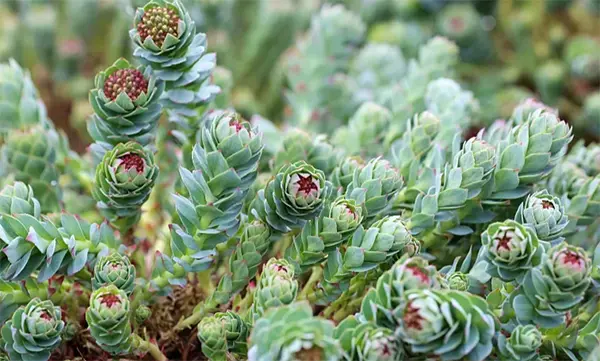
China Rhodiola Rosea Extract Suppliers, Factory
Product Description
Compound: Rosavin
CAS number: 84954-92-7
Molecular Formula: C20H28O10
Molecular Weight: 428.43
Structural Formula:
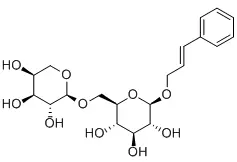
Compound: Rosarin
CAS number: 84954-93-8
Molecular Formula: C20H28O10
Molecular Weight: 428.43
Structural Formula:
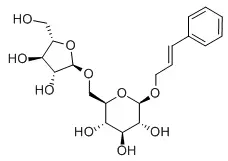
Compound: Rosin
CAS number: 85026-55-7
Molecular Formula: C15H20O6
Molecular Weight: 296.32
Structural Formula:
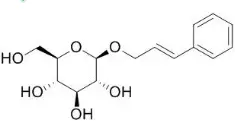
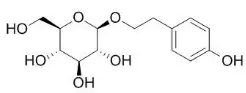
Compound: Salidroside
CAS number: 10338-51-9
Molecular Formula: C14H20O7
Molecular Weight: 300.30
Structural Formula:
Rosavins: This group of compounds, including rosavin, rosarin, and rosin, is unique to Rhodiola rosea and contributes significantly to its adaptogenic properties. Rosavins help modulate stress response, improve mood, and enhance cognitive function by influencing neurotransmitter levels and supporting mitochondrial health.
Salidroside: This bioactive compound is a potent antioxit and anti-inflammatory . Salidroside protects against oxidative stress, supports energy production, and promotes neuroprotection. It also enhances physical performance by improving muscle oxygenation and reducing fatigue.
Mechanism: Rhodiola rosea Extract helps the body adapt to stress by modulating the hypothalamic-pituitary-adrenal (HPA) axis and increasing the resistance to stress. Rosavins and salidroside contribute to balancing neurotransmitter levels and reducing cortisol levels.
Supporting Evidence: A study in "Phytomedicine" (2012) showed that Rhodiola rosea Extract significantly reduced symptoms of stress and improved mental performance in subjects with stress-related fatigue (Panossian et al., 2012). Another study in "Journal of Ethnopharmacology" (2010) demonstrated that Rhodiola supplementation lowered cortisol response to stress (Olsson et al., 2010).
Mechanism: The neuroprotective effects of Rhodiola rosea Extract are attributed to its ability to increase brain levels of serotonin, dopamine, and norepinephrine. Rosavins and salidroside protect neurons from oxidative stress and enhance mitochondrial function, leading to improved cognitive function.
Supporting Evidence: Research in "Frontiers in Pharmacology" (2018) found that Rhodiola rosea Extract improved memory and learning abilities in animal models of cognitive impairment (Liao et al., 2018). Another study in "Current Clinical Pharmacology" (2012) indicated that Rhodiola supplementation enhanced cognitive function and reduced mental fatigue in humans (Darbinyan et al., 2012).
Mechanism: Rhodiola rosea Extract enhances physical endurance and reduces fatigue by increasing ATP production and improving oxygen utilization. Rosavins and salidroside also have anti-inflammatory properties that aid in muscle recovery.
Supporting Evidence: A study published in "International Journal of Sport Nutrition and Exercise Metabolism" (2004) showed that Rhodiola supplementation improved exercise performance and reduced perceived exertion in athletes (De Bock et al., 2004). Another study in "Planta Medica" (2009) found that Rhodiola rosea Extract decreased fatigue and improved endurance in healthy volunteers (Spasov et al., 2009).
Rhodiola rosea Extract is a potent adaptogen with a wide range of health benefits supported by scientific research. Its ability to reduce stress, enhance cognitive function, and improve physical performance makes it an excellent addition to health and wellness regimens. Rich in rosavins and salidroside, Rhodiola rosea Extract is well-researched and effective for promoting overall well-being.








